This isn't a checklist or a promise to cover every edge case. It's context — the kind that helps you avoid expensive mistakes if you're considering buying here.
Tribeca is one of Manhattan's most distinctive neighborhoods. Cobblestone streets, former industrial buildings, and price points that leave very little room for error.
If you're buying here, you're not just choosing an apartment. You're choosing a building type, a set of rules, and a lifestyle that quietly rewards preparation and punishes assumptions.
This isn't everything you need to know. It's what actually matters.
What Tribeca Is (and Why That Matters)
Tribeca stands for Triangle Below Canal Street. Canal to the north, Broadway to the east, Chambers to the south, and the Hudson River to the west. A small footprint with an outsized influence on downtown real estate pricing.
What really defines Tribeca isn't geography — it's history.
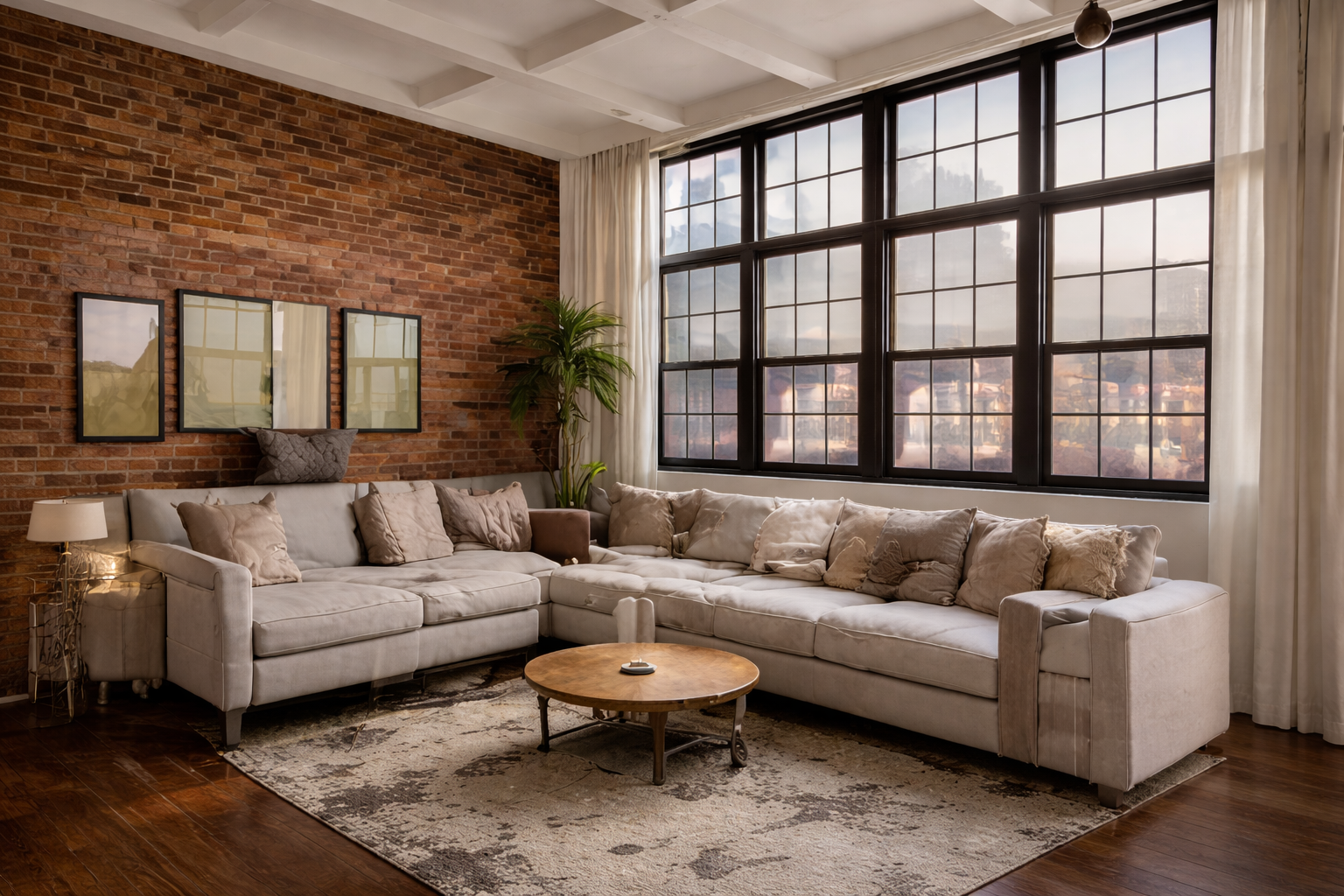
Many of the neighborhood's residential buildings began life as warehouses, factories, or commercial spaces. That industrial past shows up in the architecture: high ceilings, oversized windows, open layouts, cast-iron columns, and proportions that simply don't exist in most newer construction.
Those bones started commanding premium prices decades ago. They still do.
The Loft Premium (and the Trade-Off)
True loft conversions — buildings that were genuinely commercial or industrial — sit at the top of the Tribeca market.
These apartments often feature:
- 12-foot (or higher) ceilings
- massive windows
- exposed brick and structural elements
- open, loft-style layouts
They also come with trade-offs:
- older building systems
- fewer amenities
- layouts that don't always behave the way modern buyers expect
Some buyers love that character. Others don't. Neither is wrong — but pretending there's no trade-off is how buyers get surprised later.
Not every Tribeca building is a converted loft. Over the last two decades, ground-up luxury condos have entered the neighborhood, offering modern systems, predictable layouts, and amenities that older buildings simply can't retrofit.
Different buildings. Different priorities.
What's Actually for Sale in Tribeca
Co-ops
Tribeca has relatively few co-ops compared to other Manhattan neighborhoods. When they do come on the market, they're usually in older residential buildings and typically trade at a discount to comparable condos.
That discount exists for a reason. Board approval, sublet restrictions, and financing limitations still apply. For buyers who understand and accept those constraints, co-ops can offer relative value in an otherwise expensive market.
Condos
This is where most of Tribeca's inventory sits.
Converted loft condos and newer developments dominate the market. Buyers get flexibility: easier financing, fewer restrictions, and the ability to sublet or use the apartment as a pied-à-terre.
Pricing generally starts around $1,500 per square foot and moves up quickly depending on ceiling height, light, building quality, and views. Trophy properties — especially those with outdoor space or river exposure — regularly exceed $3,000 per square foot.
Townhouses
Rare and expensive.
Tribeca's townhouse inventory is limited, but when properties do trade, they represent the neighborhood's most exclusive tier. These are typically single-family conversions or ground-up builds, often landing in the $10–30 million range.
What Actually Drives Pricing Here
A few variables consistently move the needle:
Ceiling height
Every foot above ten matters. Twelve- and fourteen-foot ceilings trade at a clear premium.
Light and exposure
Southern and western exposures, especially with open city or river views, justify higher pricing.
Building condition
Newer construction with modern systems trades higher than older conversions that may require capital improvements.
Outdoor space
Terraces, balconies, and private roof decks are scarce and priced accordingly.
Amenities
Doorman, elevator, parking, storage — common in newer buildings, often absent in loft conversions.
Parks
Proximity to Hudson River Park or Washington Market Park strengthens demand and resale value.
The Board Package Reality (No, It's Not Nothing)
Even though most Tribeca buildings are condos, many still require some level of board review.
This isn't co-op-level scrutiny, but it's not a rubber stamp either. Depending on the building, expect to provide financial documentation, bank and investment statements, and a purchase application with background information. Some buildings also request reference letters.
Approval rates are high, but the process takes time. Four to eight weeks after contract is common, particularly in larger or more administratively complex buildings. Plan accordingly if you're coordinating a sale or relocation.
Living in Tribeca: The Upsides
Quiet, low-density streets
Tribeca feels residential despite being in Lower Manhattan. Foot traffic is lower than surrounding neighborhoods, and many blocks feel insulated from city noise.
Schools
PS 234 is widely regarded as one of Manhattan's top public elementary schools, and proximity to the school is reflected in pricing.
Dining and culture
A dense concentration of quality restaurants, boutique retail, and cultural institutions without tipping into chaos.
Transportation
Excellent access to the 1, 2, 3, A, C, and E subway lines.
The Trade-Offs (Because There Always Are)
It's quiet — sometimes very quiet
If you want constant street energy, this may not be the right fit.
Tourist spillover
Certain blocks see heavier foot traffic due to proximity to the World Trade Center and Battery Park, especially in warmer months.
Price discipline matters
Tribeca is expensive even by Manhattan standards. Overpaying here is easy if you're not careful.
Mistakes I See Buyers Make
Romanticizing loft aesthetics without understanding maintenance
Older buildings can require major capital work. Read the financials.
Underestimating monthly costs
Maintenance, common charges, and property taxes add up quickly.
Assuming amenities don't matter
If you want a doorman, gym, or storage, make sure the building already has it. You're not adding it later.
Ignoring school proximity
Even if it's not relevant now, it affects resale and long-term value.
Closing Mechanics Worth Knowing
Tribeca deals follow standard Manhattan protocols, with a few items worth flagging:
Title and lien searches
Converted buildings can have complex histories. Work with counsel who understands loft law.
Mansion tax
Purchases over $1M trigger New York's mansion tax, scaling from 1% to 3.9%. Most Tribeca purchases fall into higher brackets.
Sponsor units
Some buildings still have sponsor-owned inventory. These transactions can move faster but often come with different terms.
Final Thought
Buying in Tribeca isn't about chasing a vibe. It's about understanding what you're buying, how the building operates, and what you're signing up for long-term.
Spend time in the neighborhood. Walk the blocks. Visit at different hours. Read the financials. Ask unromantic questions.
Tribeca rewards patience and preparation — and quietly punishes people who rush.