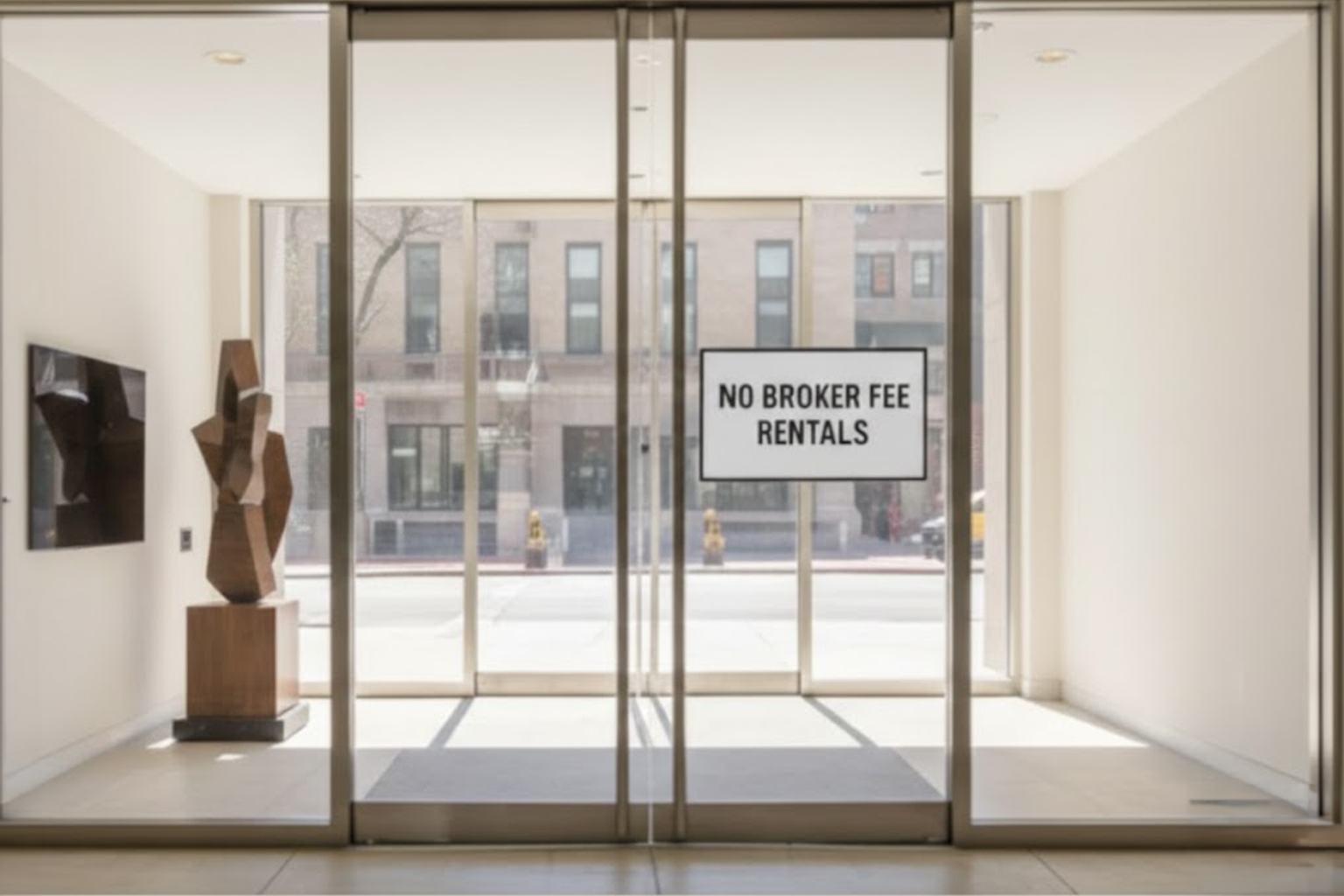
For years, renters in New York City pushed hard for no-fee apartments.
That reaction made sense.
Moving in New York is already expensive: first month's rent, security deposit, movers, time off work, application fees, and the general psychic toll of trying to land an apartment in a market that moves faster than common sense. Adding a 12–15% broker fee on top of all that often felt punitive. In many cases, it was.
I've said publicly — and repeatedly — that a 15% rental fee can feel excessive, especially in a city where affordability is already stretched thin. So yes, the demand for "no fee" housing was understandable. It wasn't greed. It was survival math.
What received far less attention was what happens when "no fee" stops being a preference and becomes policy.
The FARE Act and the Shift to "No Fee" by Default
New York eventually formalized the no-fee structure through the FARE Act (Fairness in Apartment Rental Expenses).
The logic was straightforward:
If a landlord hires the broker, the landlord pays the broker.
If a renter hires their own agent, the renter pays.
On paper, this is clean. Logical. Hard to argue with.
And in many ways, it is a fair clarification. Responsibility was assigned. Ambiguity was removed. The law answered a question renters had been asking for years: Who hired you, and why am I paying for it?
But laws don't exist in a vacuum. Markets respond. And once responsibility was reassigned, the market adjusted — quickly.
Broker fees didn't disappear. They moved upstream.
"No fee" became the default language.
And rents began to reflect that shift.
The law clarified who pays.
It did not change how costs are recovered.
Markets Don't Eliminate Costs. They Relocate Them.
This is the part most people don't like to hear — but it's also the part that matters.
Once landlords absorbed broker fees directly, the math had to land somewhere. There is no alternate universe where a recurring cost simply evaporates because the invoice changed hands.
What followed was predictable:
- Landlords paid the fee
- Rents increased to offset it
- That higher rent became the new baseline
- Renewals built on that baseline
- The cost compounded year after year
In many cases, renters traded a one-time upfront expense for a permanent rent increase.
That's not ideology. That's arithmetic.
And it explains something renters have been feeling but struggling to articulate: why rents didn't "come back down" once no-fee became common. Once a cost is embedded into base rent, it doesn't reset. It stacks.
The fee didn't vanish.
It became invisible — and permanent.
Why "No Fee" Doesn't Mean "Free"
This is where the conversation usually collapses into slogans.
"No fee" apartments are not free. They're financed differently.
In some situations, that structure makes sense:
- Shorter stays
- Tight upfront cash flow
- Uncertainty about how long you'll remain in the apartment
In others, the math quietly flips.
A slightly higher rent paid over several years can exceed what a one-month — or even larger — upfront fee would have been. Especially once renewals build on that inflated base.
This isn't an argument for broker fees.
It's an argument against pretending tradeoffs don't exist.
Clarity beats slogans. Every time.
A Reality Check on Listings and "Availability"
Another source of confusion lives online.
Many listings aren't posted directly by landlords. They're often posted by agents — sometimes representing the owner, sometimes testing demand, sometimes using a unit as a point of entry into a conversation.
That doesn't automatically make them illegitimate. But it does mean availability, fees, and expectations aren't always as clean as the headline suggests.
"No fee" is marketing language.
It tells you who isn't paying the broker — not how the deal is structured over time.
Transparency upfront is the only way to avoid wasted time, false assumptions, and frustration on all sides.
A Practical Note on Fees (Including Mine)
I don't treat broker fees as sacred. I also don't pretend they're imaginary.
Here's how I work — plainly:
- For rentals, when applicable, I generally charge one month's rent
- Many rentals are landlord-paid ("no fee")
- When they are, I explain the structure and we proceed
- When they're not, I explain that too — upfront
- I do not charge 15% on rentals
- I do not bait people with "free" language that gets clarified later
- I do not wait until the last minute to explain compensation
People rarely object to fees.
They object to surprises.
If your sole objective is to chase the narrowest slice of no-fee inventory in the most competitive segments of the market, another agent may be a better fit. My practice isn't built around volume or scarcity games. It's built around context and alignment.
Why I Require a Signed Agreement
This part isn't negotiable — and it's intentional.
I don't show apartments without a signed agreement.
Showing apartments requires time, coordination, preparation, follow-up, and real labor. When expectations aren't defined upfront, accountability disappears. Schedules get rearranged. Energy gets spent. And nobody's actually protected.
An agreement doesn't trap anyone.
It defines the relationship.
If that structure feels uncomfortable, we're probably not a fit — and that's fine. I'd rather establish that early than after three showings, five texts, and a misunderstanding about expectations.
The Bigger Picture
This isn't about defending brokerages.
It's not about demonizing landlords.
And it's not about telling renters they're wrong.
It's about understanding how costs move through a system — and making informed decisions instead of emotional ones.
"No fee" solved an immediate problem.
It also created a longer-term one.
That doesn't make it bad policy.
It makes it incomplete.
Transparency is the only durable solution.